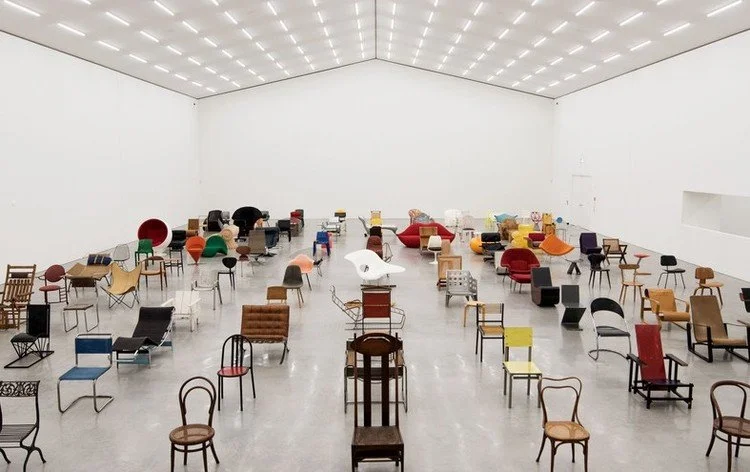
Image credit: Historical Chair collection, Vitra Design Museum
The chair has never been about sitting. The timeline of chair design offers a remarkably clear record of changing social values. It reveals who deserves to sit, where people sit, how they work and live, what technology can produce, and what society considers comfortable, democratic or desirable. From the throne and ceremonial chairs of ancient Egypt, where hierarchy and authority were physically expressed, to the industrially mass-produced furniture of the 19th and early 20th centuries, key developments in the chair reveal changing ideas about status, manners, comfort, fashion and domestic life. Its history is not simply a chronicle of furniture design, but a reflection of how societies understand power, technology, the body and each other.
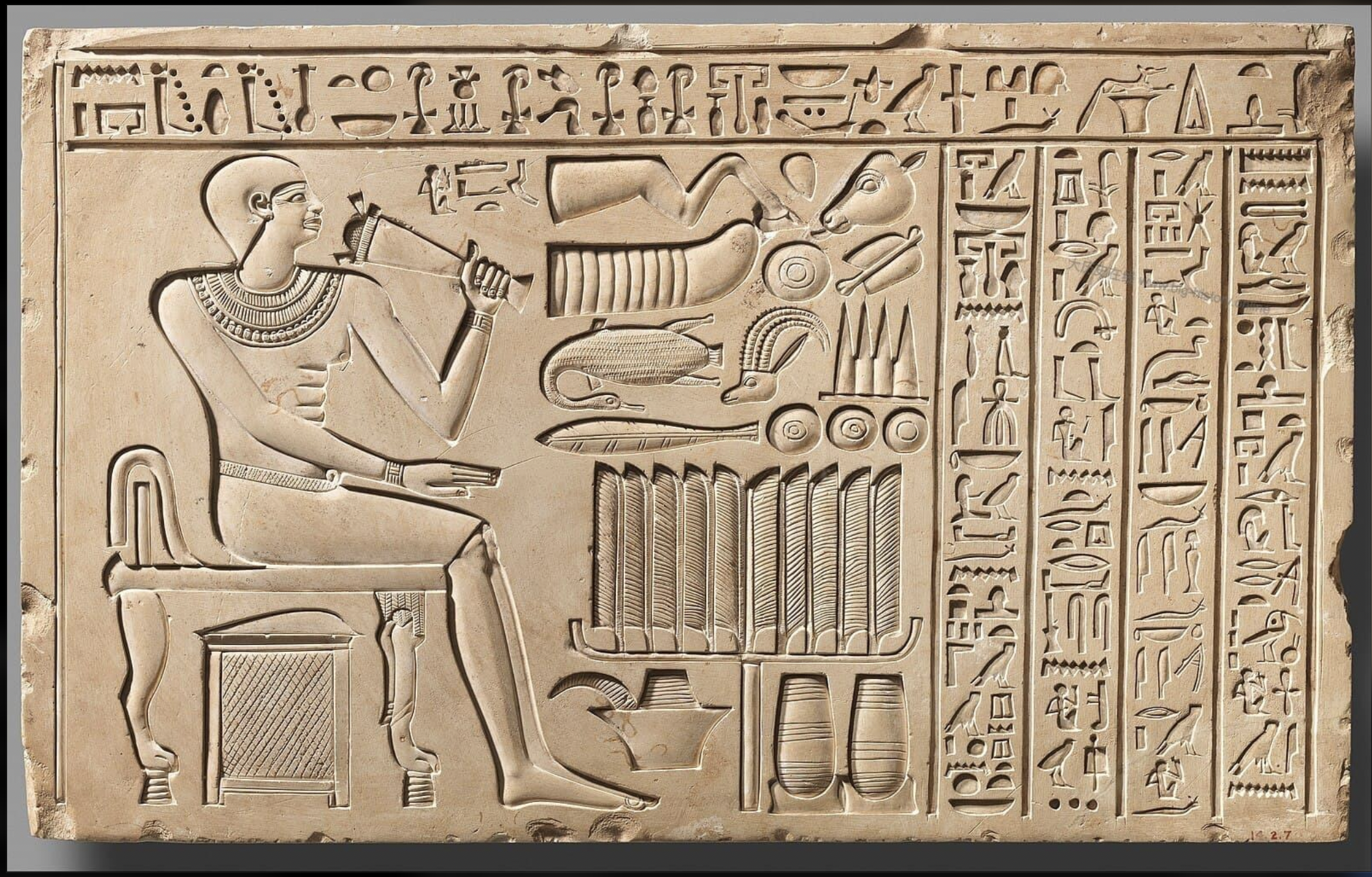
Image credit: Stele of Imrit, Cairo Museum.
There isn't a known single "first chair" with a precise invention date, but some of the earliest evidence of the chair appears in ancient Egypt. A depiction of Narmer, Egypt's first king, shows him seated beneath a canopy on a throne raised on a high, stepped dais. What is significant about this early chair is not simply its construction but the relationship it creates between the person sitting in it and everyone around him. The elevated seat physically separates Narmer from those below him, turning the chair into an instrument for displaying authority. The association between seated figures and rank was also embedded in Egyptian Hieroglyphic writing, where the seated figure served as a determinative for a person of rank. From its earliest documented history, the chair was already communicating something about who held power and how that power should be seen.
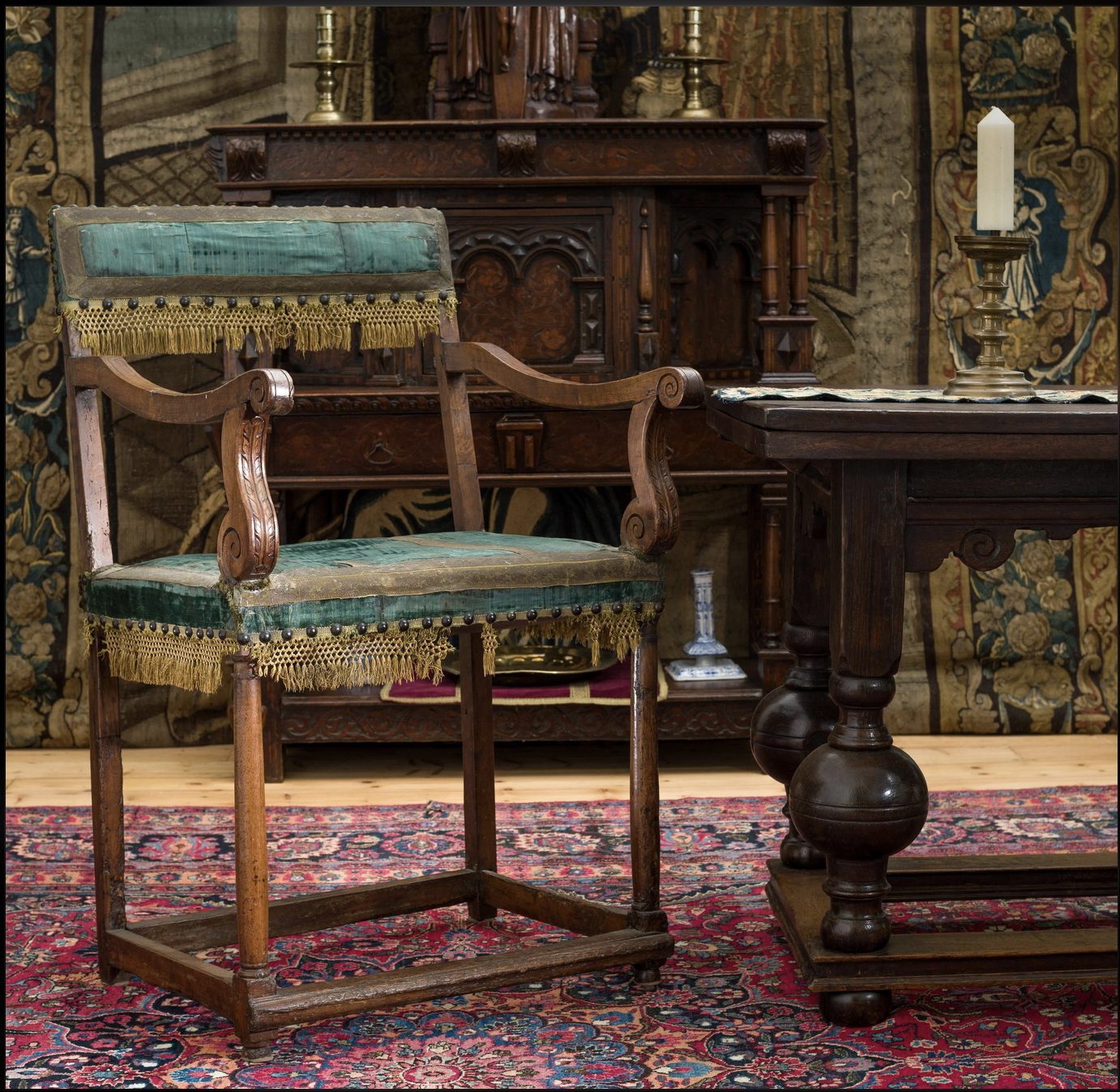
Image credit: Italian Renaissance Revival armchair, Marhamchurch Antiques.
The relationship between seating and hierarchy persisted through the Middle Ages, with relatively little development in chair design. By the Italian Renaissance, humanism and a renewed interest in classical style began to transform both the chair's design and its role within the interior. Greater attention to individual experience brought a growing emphasis on comfort and luxury, with upholstered seating becoming an important new development of chair design. Furniture also became more mobile and specific to its setting, with chairs designed for spaces such as the hall, dining room, and bedchamber. Renaissance chairs were often substantial, sturdy, and rectilinear, possessing strong horizontal proportions that communicated the stability and permanence of this golden period. Growing patronage from wealthy families such as the Medici encouraged elaborate craftsmanship, allowing furniture to communicate wealth, education, taste, and artistic merit.
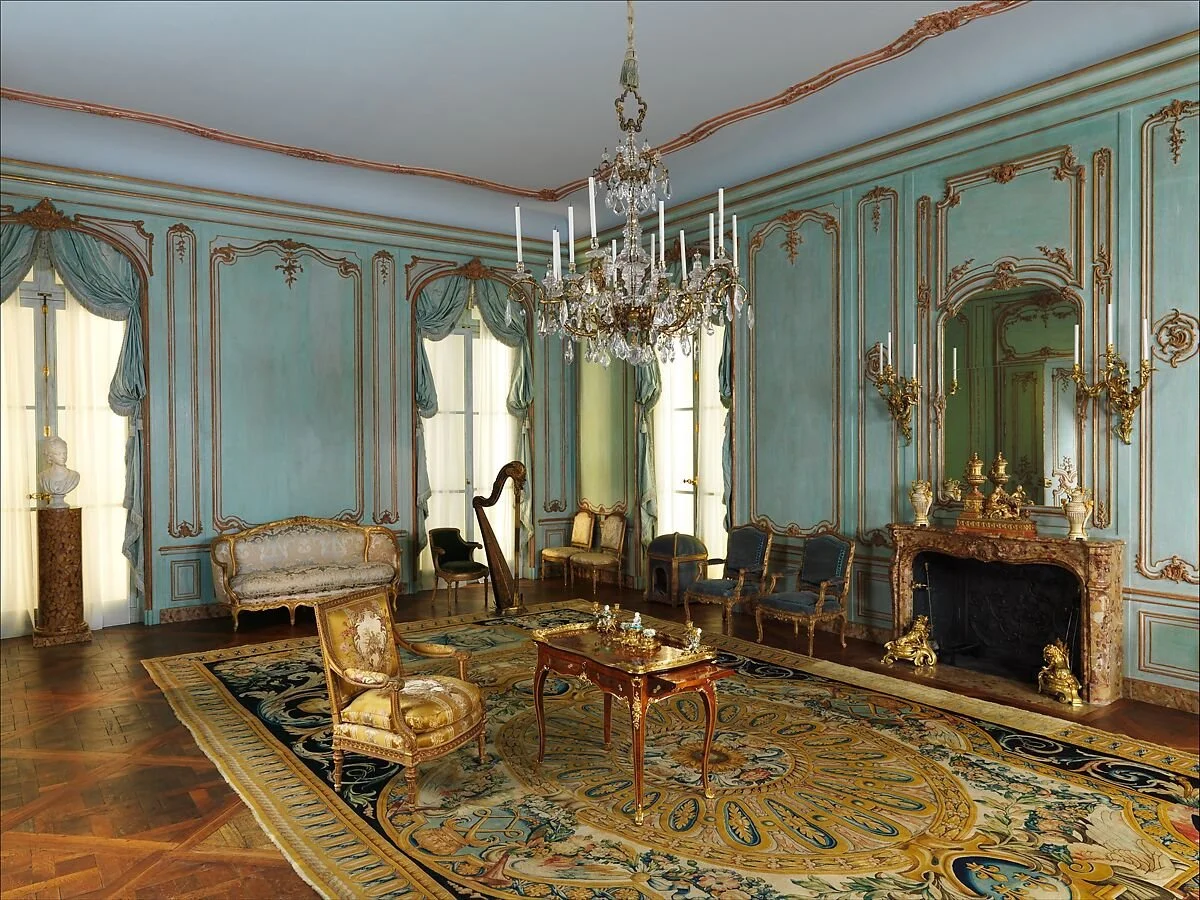
Image credit: Boiserie from Palais Paar, The Metropolitan Museum of Art.
Once the chair could announce wealth and power, the 18th century taught it to flirt. France became the dominant arbiter of European fashion, and French furniture was admired and imitated across Europe. At the same time, expanding commerce created new wealth and a rising merchant class. For the elite, elaborate interiors became a way to distinguish themselves from those newly entering the ranks of prosperity. Rococo furniture celebrated leisure and pleasure: the cultivated art of doing very little. The chair made this new social life visible. Formal, upright seating gave way to more graceful and comfortable forms, with low, curved frames, upholstered seats, and concave backs. New types of armchairs and specialized seats for reading, writing, gaming, and even hairdressing flourished during this period. Furniture was increasingly designed not just to support the body, but to choreograph it, shaping posture, movement and social performance. The 18th century is widely considered the golden age of furniture making, and styles proliferated and changed with unprecedented speed during this time. Pattern books such as Thomas Chippendale’s The Gentleman and Cabinet-Maker's Director (1754) circulated designs among craftsmen and consumers, allowing fashionable styles to spread more quickly and widely. Taste itself was becoming something to select, display, and use as a marker of social position.
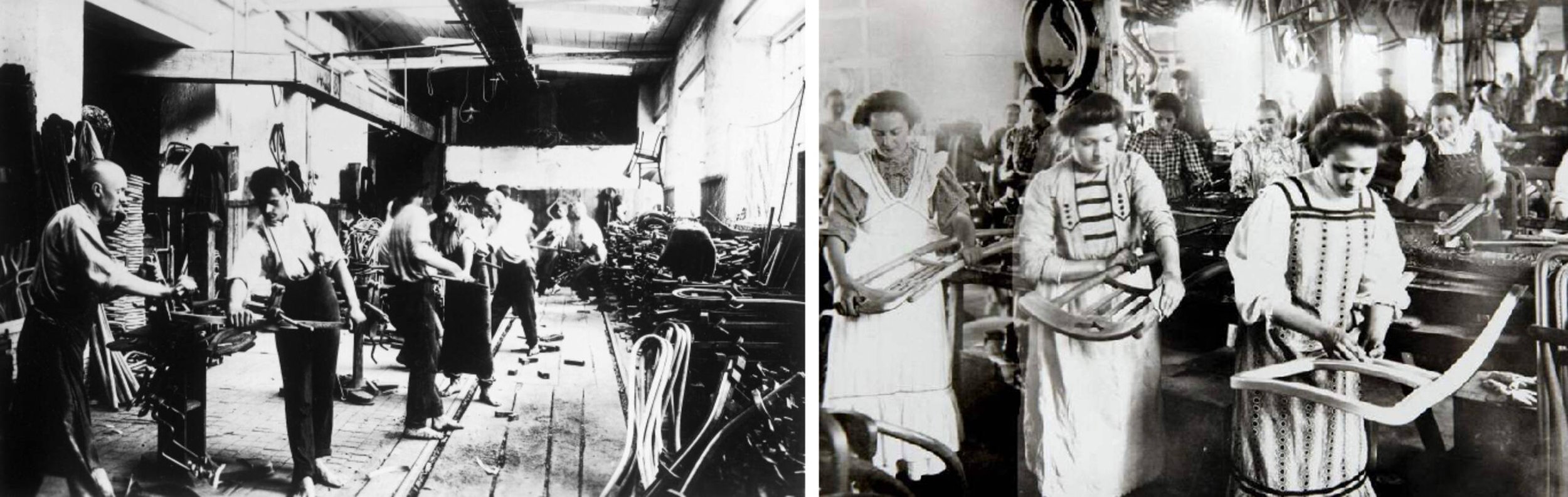
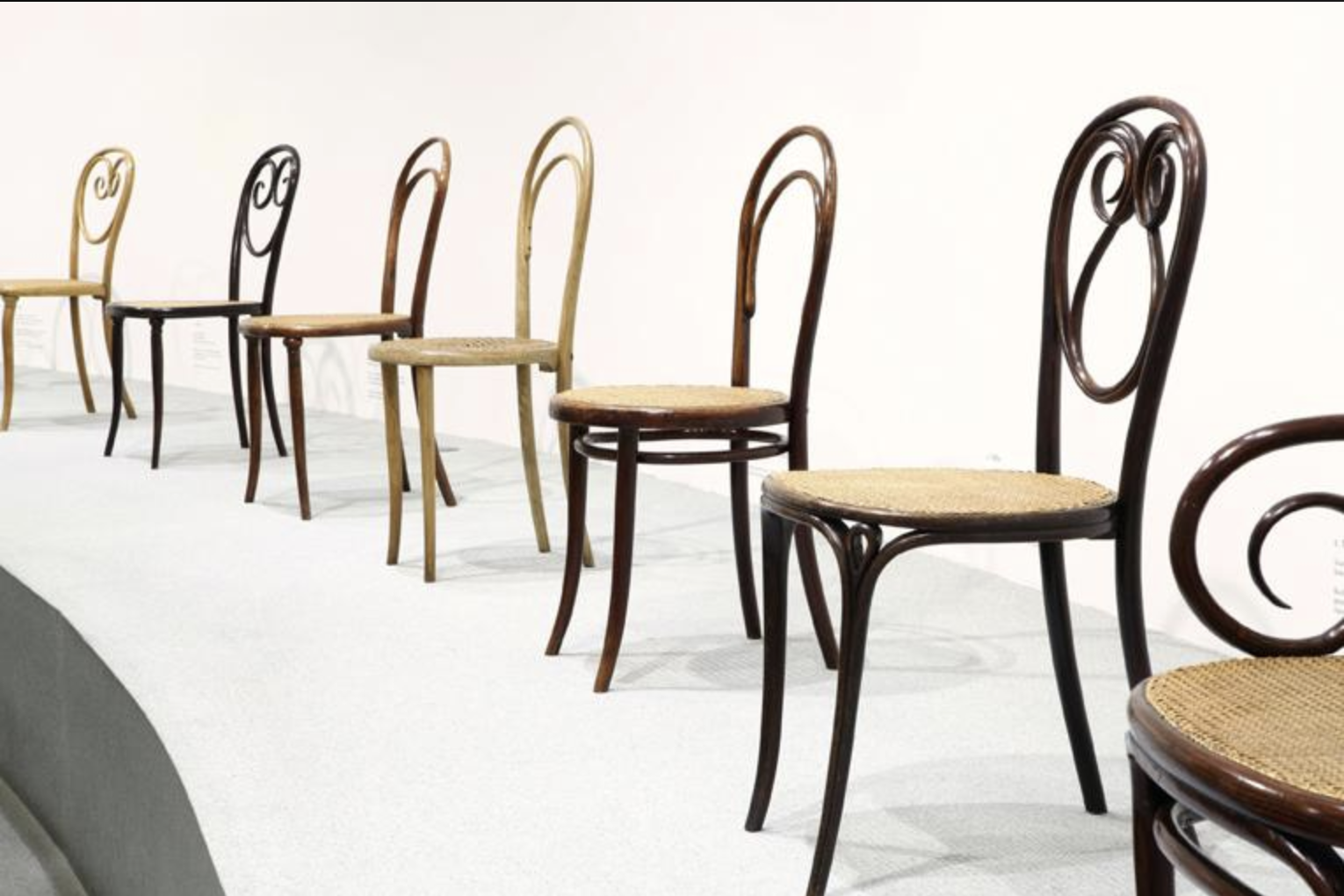
Image credit: Thonet factory, Gebrüder Thonet
Image credit: Thonet bentwood chair collection, Heike Ladendorf, Used Design
If the 18th century made furniture a language of leisure, taste and social distinction, the 19th century industrialized that language while transforming the world around it. Factories, railroads, and electricity reshaped work, production, mobility, and domestic life, creating a larger and more mobile consumer society. Furniture responded accordingly. Industrial methods made chairs standardized, lightweight, durable, inexpensive, and widely distributable, transforming furniture from an object made for a particular household into a product made for a growing marketplace. Thonet's bentwood chair became a defining example of this transformation, combining standardized manufacturing with a lightweight, durable design that could be produced and distributed on an unprecedented scale. Yet even as new technologies accelerated production and transformed daily life, historic styles such as Gothic, Renaissance, Rococo, and Neoclassical revivals remained popular. Industrial manufacturing made these recognizable forms easier and less expensive to reproduce, allowing the expanding middle class to access furniture inspired by earlier periods.
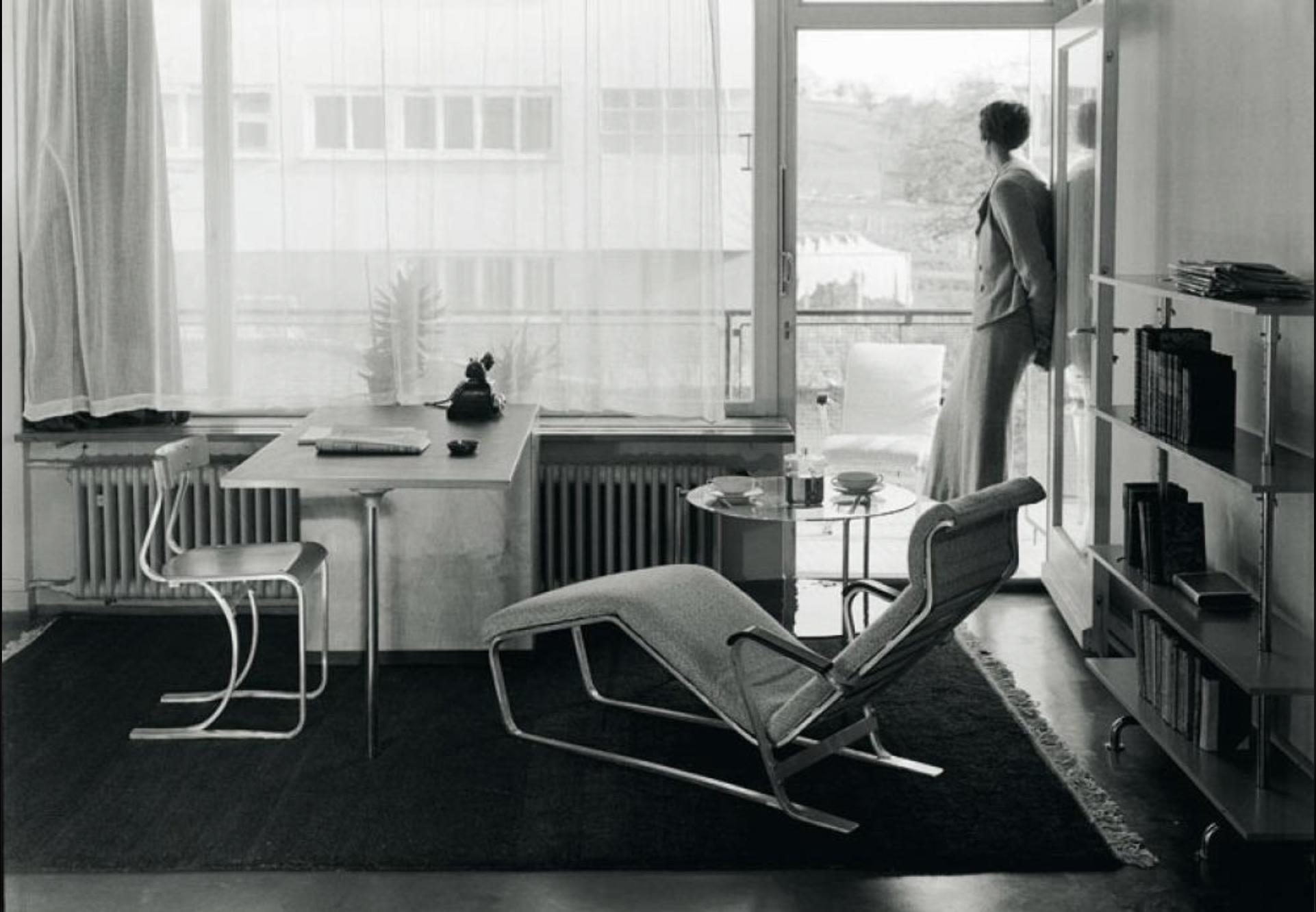
Image credit: Bauhaus interior, 1927, Erich Consemüller.
As society became increasingly shaped by speed, efficiency, standardization, and new forms of personal freedom, by the early 20th century the chair became a medium for artistic and theoretical experimentation. The tubular steel chair emerged as one of the defining forms of Modernist furniture. Designers were no longer simply adapting established furniture forms to new production methods; they were questioning what a chair needed to be, what it could communicate, and how it could relate to the human body. Marcel Breuer's tubular steel B3 Club chair became an emblematic example of this Modernist approach, using industrial materials as part of its aesthetic rather than concealing them. Its cantilever frame departed from the traditional four-leg structure, experimenting with how a chair could support the body while creating the appearance that the sitter was floating in air. Le Corbusier approached furniture through a similar emphasis on rationalization, developing standardized designs influenced by the efficiency and engineering of automobiles and ocean liners. He viewed furnishings as functional elements within the modern home, which he famously described as a "machine for living." Across these examples, the chair became a medium through which designers could explore ideas about structure, abstraction, proportion, technology, the body, and modern life. Its significance was no longer determined primarily by ornament, craftsmanship, or social status: the chair itself had become a subject of design inquiry.
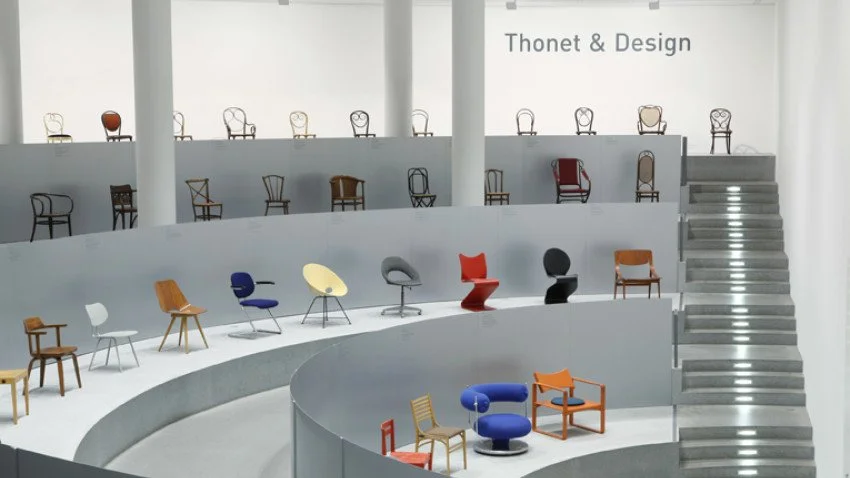
Image credit: Thonet chair collection, Heike Ladendorf, Used Design.
The chair’s history extends far beyond the early 20th century, but even these examples demonstrate how closely its design has reflected shifting structures of power, economic prosperity, domestic life, and cultural values. Its changing forms reveal how societies have redefined comfort, status, functionality, and artistic expression in response to their circumstances. More than a piece of furniture, the chair provides a tangible record of how people have lived, worked, and socialized, revealing how familiar objects can reflect the larger forces shaping society.
Sources
Scott, Nora. 1965. “Our Egyptian Furniture.” The Metropolitan Museum of Art Bulletin.
Cranz, Galen. 1998. The Chair: Rethinking Culture, Body and Design. W. W. Norton.
Asheford E-Course Plan 4. Furniture of the Middle Ages.
Art of the Royal Court: Treasures in Pietre Dure from the Palaces of Europe. 2008. The Metropolitan Museum of Art.
Koda, Harold, and Andrew Bolton. 2006. Dangerous Liaisons: Fashion and Furniture in The Eighteenth Century. The Metropolitan Museum of Art.
Design Museum. “Chairs – Late 1800s.”
Zimmerman, Devon. January 6, 2020. “Bending Form, Not Function.” Cooper Hewitt.
Asheford E-Course Plan 2. The Renaissance Period.
Winton, Alexandra Griffith. August 1, 2007. Revised October 1, 2016. “The Bauhaus, 1919–1933.” The Metropolitan Museum of Art.
Victoria and Albert Museum. 2024. “Modernist Architecture: The Bauhaus and Beyond.”
Trope, Cynthia. June 29, 2013. “The B5 Chair.” Cooper Hewitt.
The Metropolitan Museum of Art. “Siège à Dossier Basculant” Armchair (Model B 301).
MoMA. 2019. Highlights 375 Works from The Museum of Modern Art, New York